
omniVUE / Health Operations
Predict demand.Build better schedules.Respond before the shift breaks.
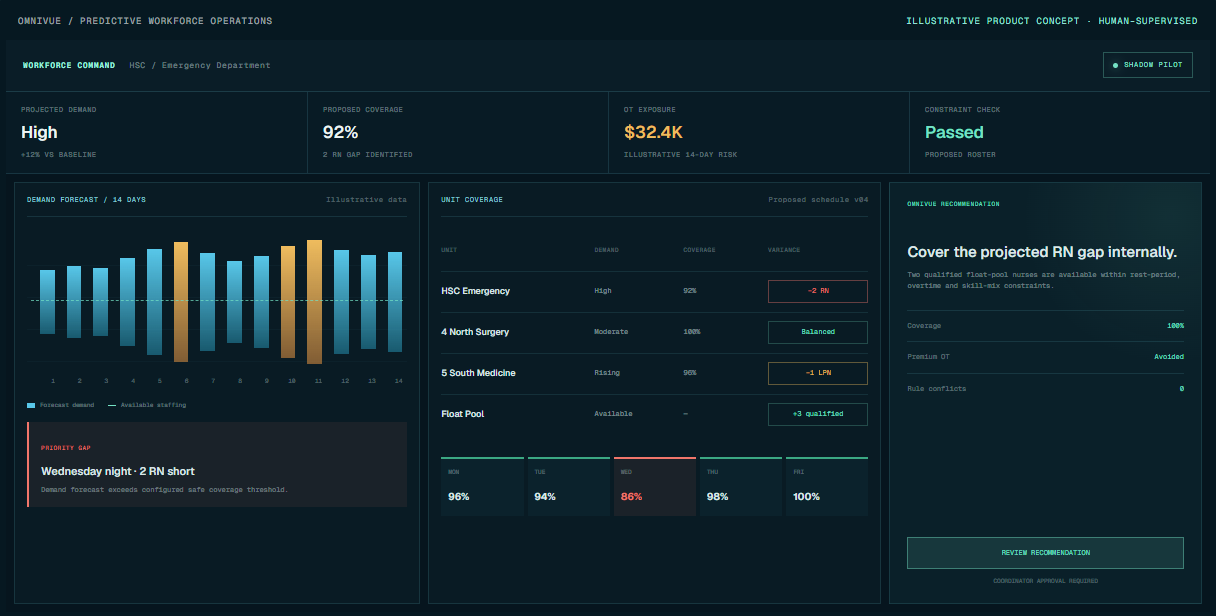
Forecast staffing needs, draft rosters that follow your rules and respond to call-ins with the whole system in view. Coordinators make every decision.
01Overview
Demand shifts, staff call in sick, beds close, and every coverage decision has to respect qualifications, policy and collective agreements. Too often the search for coverage starts when only the most expensive options are left.
- For
- Workforce, operations, clinical and scheduling leaders
- Uses
- Census and acuity history, rosters, leave, qualifications and collective agreement rules
- Fits
- Your data residency, privacy rules and approval authority, beside your existing systems
- Status
- Workforce planning is proposed. Patient-flow coordination runs today in a demonstrator.
02Workforce planning
From predicted demand to a roster that follows the rules.
Forecast what each unit needs, draft a schedule, show how every rule was applied and help coordinators act early when plans change.
Forecast demand
Estimate census, acuity and pressure for each unit from historical and current data.
Draft the roster
Propose a skill mix that fits staffing requirements, availability, leave and local rules.
Check every rule
Rest periods, qualifications, rotation limits and seniority are tested and shown, not assumed.
Respond to change
When someone calls in or demand surges, see the impact and the best ways to cover it.
Coordinators decide
People review each recommendation, resolve exceptions and keep the decision record.
03Patient flow
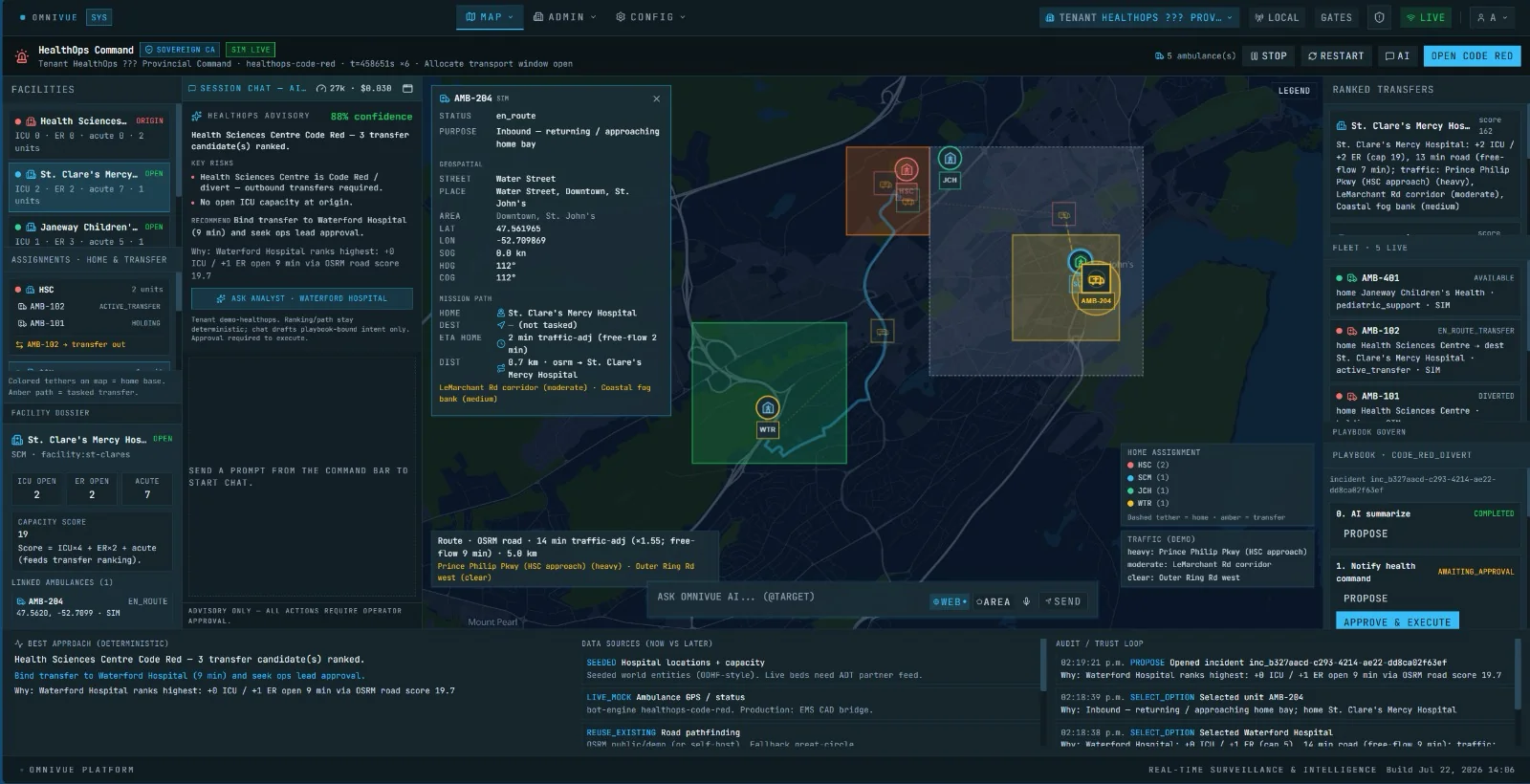
Patient-flow coordination already runs in omniVUE.
Our St. John's demonstrator links facility pressure, ranked transfer destinations, ambulances, routes, an AI-assisted summary and an approval step. It coordinates operations; it is not an EHR and does not diagnose.
04Shadow pilot
Prove the gain without changing a live schedule.
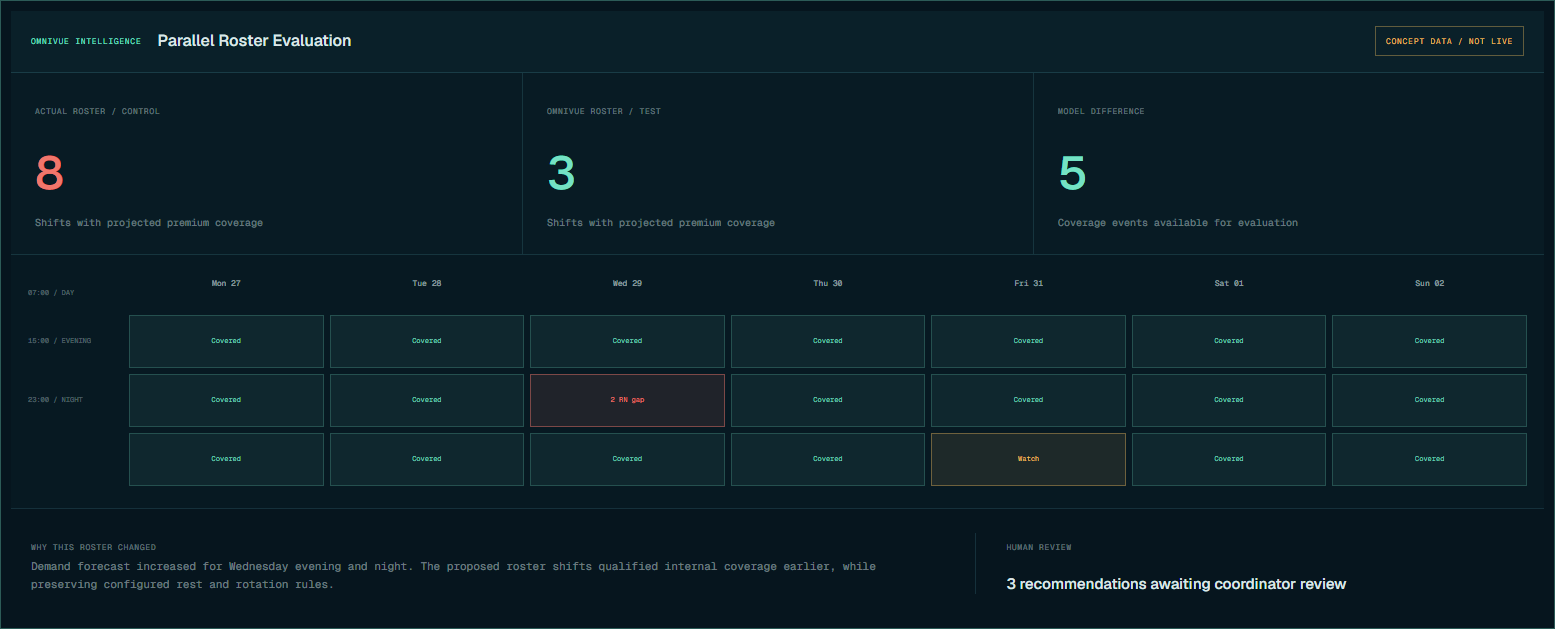
For 90 days, omniVUE's proposed roster runs beside your actual schedule. Staffing authority and processes stay exactly as they are.
Set up data and rules
Connect agreed historical data, choose the pilot unit and turn workforce policies and collective agreement terms into testable rules.
Run in parallel
Run the proposed roster beside the real one without touching live assignments. Record call-ins, gaps and coverage decisions.
Compare the results
Compare both on coverage, overtime, agency use, admin time, rule compliance and staff preferences.
Measure the difference before you decide.
Targets and baselines are agreed with your organization. We claim no savings until the pilot is done.
- Projected overtime and agency cost avoided
- Rule and rest-period compliance
- Time to draft and revise schedules
- Skill-mix and qualification coverage
- Staff preferences and leave honoured
Shadow pilot
One unit. One scheduling problem. Ninety days of evidence.
Pick a high-variability unit, agree on the rules and measures, then compare your actual roster with omniVUE's proposal.